There is often confusion between the terms Dynamics 365 Copilot for Finance and Dynamics 365 Copilot in Finance. They sound very similar, but they do not mean exactly the same thing. The difference is subtle, but important.
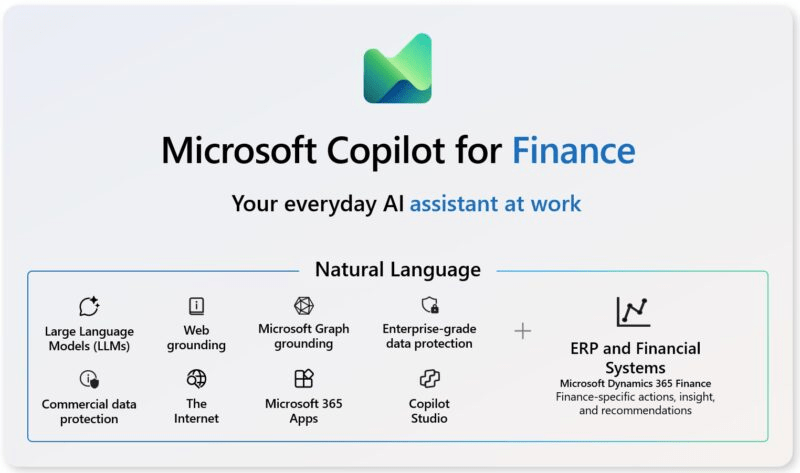
First, let’s talk about Dynamics 365 Copilot for Finance. Dynamics 365 Copilot for Finance is a specific product experience designed to support finance teams with AI capabilities. It was introduced by Microsoft as a way to bring generative AI directly into financial processes. It focuses on helping users with tasks such as invoice processing, collections, reconciliation support, email drafting, and financial insights. In simple terms, it is a packaged AI assistant built especially for finance professionals.
Now let’s look at what people mean when they say Copilot in Finance. Usually, this refers to AI Copilot capabilities embedded inside Dynamics 365 Finance. Instead of being a separate branded experience, Copilot in Finance describes AI features that are integrated directly within the core Finance application. For example, it could include AI suggestions for bank reconciliation, predictive cash flow insights, or smart summaries within the system.
So the key difference is this: Copilot for Finance is positioned as a dedicated Copilot experience focused on finance tasks, while Copilot in Finance refers more broadly to AI capabilities built into the Finance application itself.
In practice, the user experience may feel similar. In both cases, AI is helping finance teams save time, reduce manual work, and improve accuracy. For example, instead of manually drafting emails to customers about overdue payments, Copilot can suggest professional responses. Instead of reviewing long transaction lists, Copilot can summarize key differences. Instead of digging through reports, Copilot can generate insights in plain language.
The naming difference mainly reflects product positioning. “For Finance” makes it sound like a specialized assistant that serves the finance function. “In Finance” highlights that AI is embedded within the Finance system as part of the natural workflow.
Another way to think about it is this. Copilot for Finance focuses on the role of the finance professional. It is designed around common finance activities and daily tasks. Copilot in Finance focuses on the application itself, meaning AI is becoming a built-in feature of the ERP system rather than something separate.
Over time, the distinction may become less important as AI becomes fully integrated across the entire Dynamics ecosystem. Microsoft’s broader strategy is to embed Copilot experiences across all business applications, making AI a standard part of how users interact with systems.
For customers and consultants, what really matters is the value delivered. Both Copilot for Finance and Copilot in Finance aim to make finance teams more efficient. They reduce repetitive work, provide intelligent suggestions, and help users make better decisions faster. The goal is not to replace finance professionals, but to support them with smart automation.
In simple terms, Copilot for Finance is a named AI solution designed for finance roles, while Copilot in Finance refers to AI features embedded inside the Finance ERP system. The technology foundation is similar, but the naming highlights slightly different perspectives. Either way, the focus is clear: helping finance teams work smarter and close faster with the support of AI.
 Brewing thought
Leave a comment