Microsoft recently introduced a powerful new capability called Dynamics 365 ERP Analytics MCP, designed to help organizations unlock deeper insights from their ERP data using modern AI and analytics technologies.
In this blog, I will explain the key concepts from the video in simple, human language so you can understand why this is important and how it can help businesses using Dynamics 365 Finance and Supply Chain Management.
Why ERP data is valuable but hard to use
ERP systems like Dynamics 365 store a huge amount of business-critical data, including:
- Financial transactions
- Inventory levels
- Supply chain operations
- Procurement data
- Customer and vendor information
This data is extremely valuable because it tells the story of how your business is performing.
However, traditionally, accessing and analyzing ERP data has been challenging because:
- Data is stored in complex database structures
- It requires technical expertise to extract and analyze
- Business users often depend on IT or developers
- Insights are not always available in real time
Even though ERP systems contain rich operational data, turning that data into useful insights has been slow and difficult.
What is Dynamics 365 ERP Analytics MCP?
ERP Analytics MCP is designed to solve this problem.
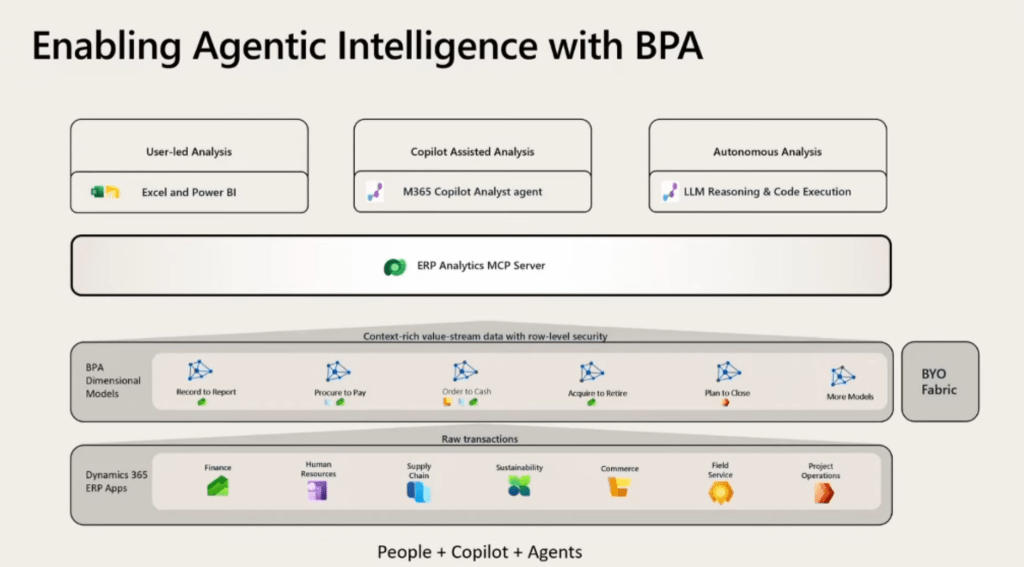
In simple terms, it acts as a bridge between ERP data and modern AI-powered analytics tools.
It helps organizations:
- Access ERP data more easily
- Analyze business data faster
- Use AI to understand trends and patterns
- Enable business users to get insights without heavy technical dependency
This makes ERP data more accessible and useful for decision making.
The role of MCP in modern AI architecture
MCP stands for Model Context Protocol.
Think of MCP as a structured way for AI models to safely and efficiently access business data.
Instead of AI guessing or working in isolation, MCP allows AI to:
- Access accurate ERP data
- Understand business context
- Provide meaningful and reliable insights
This is very important because AI becomes more useful when it works with real business data instead of generic information.
Why this matters for businesses using Dynamics 365
Organizations can use ERP Analytics MCP to answer questions like:
- What are the top customers by revenue?
- Which products are selling fastest?
- Where are supply chain delays happening?
- How is financial performance trending?
Instead of building complex reports manually, AI can help generate insights faster.
This improves:
- Decision making
- Productivity
- Operational visibility
- Business agility
Dynamics 365 already connects finance, operations, and supply chain data into one platform, and MCP helps unlock the full analytical potential of that data.
Real-world example
Imagine a finance manager wants to know:
“Why did expenses increase last month?”
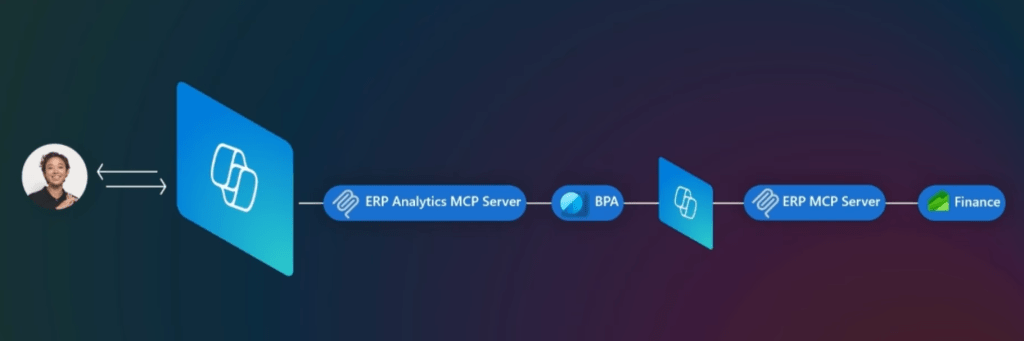
With MCP and AI integration, the system can:
- Access ERP financial data
- Analyze expense trends
- Identify anomalies
- Provide insights instantly
Without MCP, this would require manual report creation and investigation.
Key benefits of ERP Analytics MCP
Here are the major advantages:
1. Faster insights
Business users can access insights quickly without waiting for custom reports.
2. Better decision making
Leaders can make decisions based on real-time ERP data.
3. AI-powered analysis
AI can detect trends, patterns, and anomalies automatically.
4. Reduced dependency on technical teams
Business users can get insights without needing developers.
5. Modern analytics architecture
It aligns ERP systems with modern AI and data platforms.
How this aligns with Microsoft’s AI vision
Microsoft is embedding AI deeply into Dynamics 365 to help businesses become more intelligent and data-driven.
Dynamics 365 combines ERP, CRM, and AI to connect data, automate processes, and deliver actionable insights across the organization.
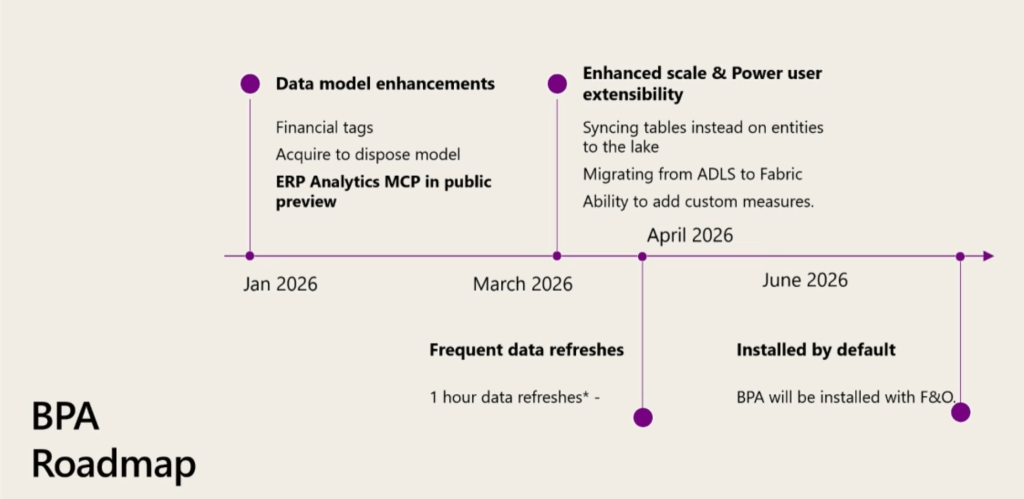
ERP Analytics MCP is a key step in enabling AI-driven ERP.
Final thoughts
Dynamics 365 ERP Analytics MCP is an important innovation because it helps unlock the true value of ERP data.
Instead of ERP data being locked inside complex systems, MCP allows AI and analytics tools to access and analyze it in a structured and intelligent way.
This enables organizations to:
- Move faster
- Make better decisions
- Use AI more effectively
- Become truly data-driven
For organizations using Dynamics 365 Finance and Supply Chain Management, this capability will play a major role in the future of AI-powered ERP.
Microsoft recently published a Tech Talk on this same topic. Watch below video for deeper insights.
 Brewing thought
Leave a comment